
文质彬彬·每日好词语 | 拟容取心
发稿时间:2026-11-13 06:11:00 来源: 中国青年报
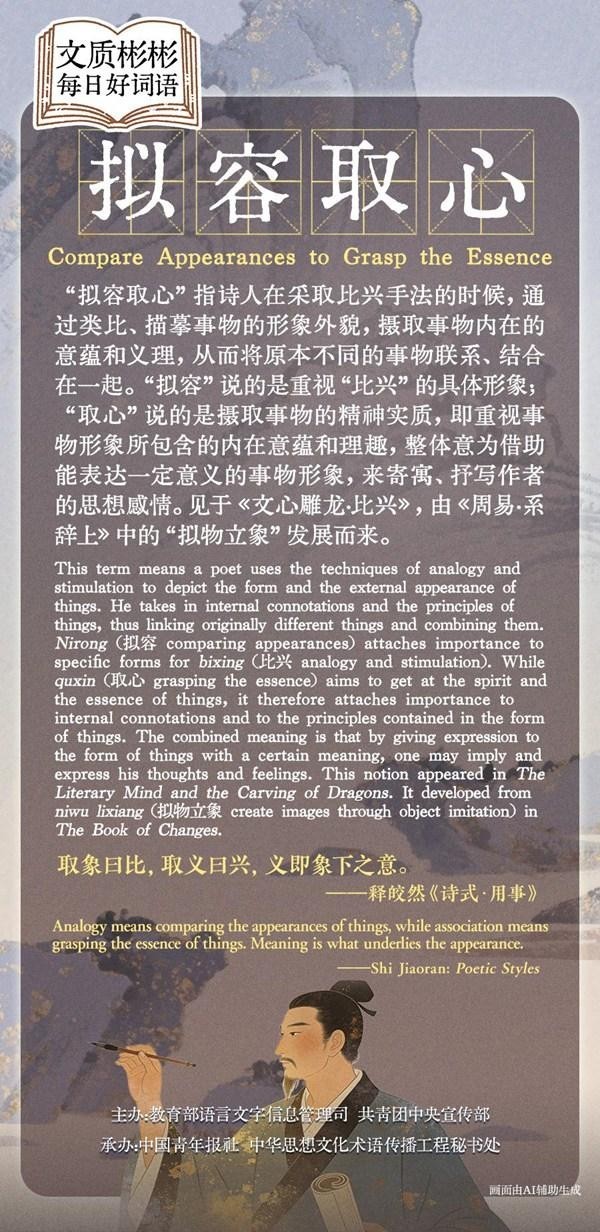
整理/李怡蒙 制图/李晗
拟容取心
“拟容取心”指诗人在采取比兴手法的时候,通过类比、描摹事物的形象外貌,摄取事物内在的意蕴和义理,从而将原本不同的事物联系、结合在一起。“拟容”说的是重视“比兴”的具体形象;“取心”说的是摄取事物的精神实质,即重视事物形象所包含的内在意蕴和理趣。“拟容取心”整体意为借助能表达一定意义的事物形象,来寄寓、抒写作者的思想感情。见于《文心雕龙·比兴》,由《周易·系辞上》中的“拟物立象”发展而来。
Compare Appearances to Grasp the Essence
This term means a poet uses the techniques of analogy and stimulation to depict the form and the external appearance of things. He takes in internal connotations and the principles of things, thus linking originally different things and combining them. Nirong (comparing appearances) attaches importance to specific forms for bixing (analogy and stimulation). While quxin (grasping the essence) aims to get at the spirit and the essence of things, it therefore attaches importance to internal connotations and to the principles contained in the form of things. The combined meaning is that by giving expression to the form of things with a certain meaning, one may imply and express his thoughts and feelings. This notion appeared in The Literary Mind and the Carving of Dragons. It developed from niwu lixiang (create images through object imitation) in The Book of Changes.
引例
取象曰比,取义曰兴,义即象下之意。(释皎然《诗式·用事》)(从事物的外部形象方面着眼是“比”,从事物的内在意蕴方面着眼是“兴”,而意蕴就含在形象之中。)
Analogy means comparing the appearances of things, while association means grasping the essence of things. Meaning is what underlies the appearance. (Shi Jiaoran: Poetic Styles)

来源:中国青年报
2026年11月13日 01版


 京公网安备 11010102004843号