
文质彬彬·每日好词语 | 仁民爱物
发稿时间:2025-12-14 06:46:00 来源: 中国青年报
整理/王璟瑄 制图/董怡璇
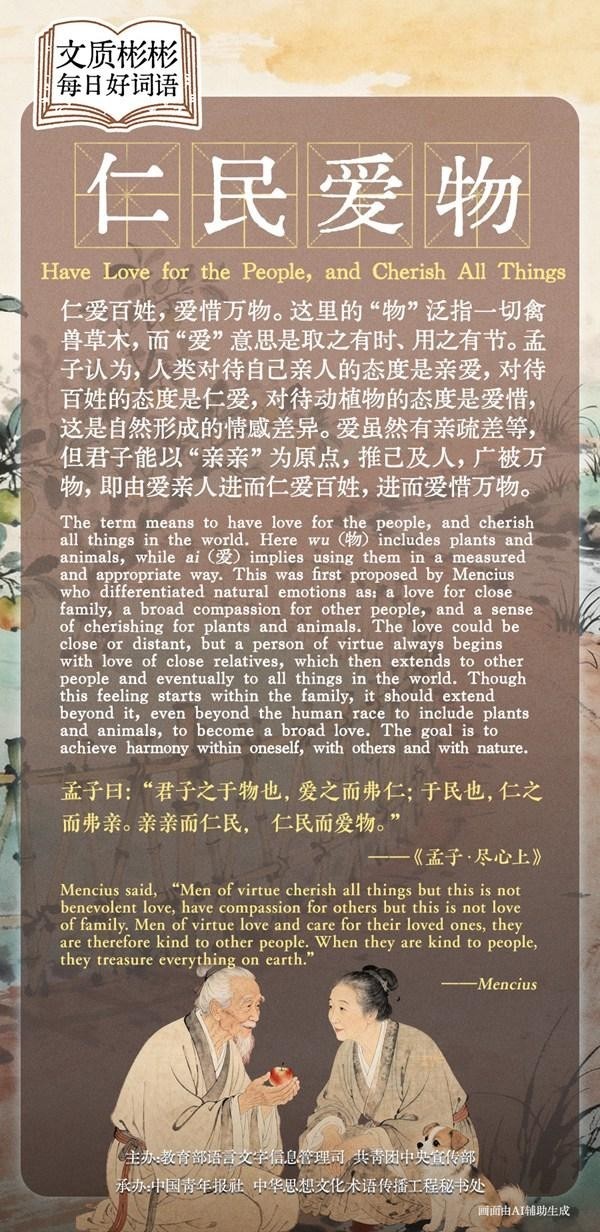
仁民爱物
仁爱百姓,爱惜万物。这里的“物”泛指一切禽兽草木,而“爱”意思是取之有时、用之有节。孟子认为,人类对待自己亲人的态度是亲爱,对待百姓的态度是仁爱,对待动植物的态度是爱惜,这是自然形成的情感差异。爱虽然有亲疏差等,但君子能以“亲亲”为原点,推己及人,广被万物,即由爱亲人进而仁爱百姓,进而爱惜万物。
Have Love for the People, and Cherish All Things
The term means to have love for the people, and cherish all things in the world. Here wu includes plants and animals, while ai implies using them in a measured and appropriate way. This was first proposed by Mencius who differentiated natural emotions as: a love for close family, a broad compassion for other people, and a sense of cherishing for plants and animals. The love could be close or distant, but a person of virtue always begins with love of close relatives, which then extends to other people, and eventually to all things in the world.
引例
孟子曰:“君子之于物也,爱之而弗仁;于民也,仁之而弗亲。亲亲而仁民,仁民而爱物。”(《孟子·尽心上》)(孟子说:“君子对于万物,是爱惜而不是施仁德;对于百姓,是要施仁德但保持亲疏的分寸;从亲爱自己的亲人,推及对百姓施行仁德,从对百姓施行仁德再推及爱惜万物。”)
Mencius said, "Men of virtue cherish all things but this is not benevolent love, have compassion for others but this is not love of family. Men of virtue love and care for their loved ones, they are therefore kind to other people. When they are kind to people, they treasure everything on earth." (Mencius)

来源:中国青年报
2025年12月14日 01版
-

中国
青年报 -

中青
看点 -

中青
校园 -

青创
头条


京ICP备13016345号-8 |  京公网安备 11010102004843号|24小时违法和不良信息举报电话:010-64098588
互联网新闻信息服务许可证10120170007号 |增值电信业务经营许可证A2.B1-20232628/京B2-20224905号|信息网络传播视听节目许可证0105108号
共青团中央主办 中国青年报主管 中青网新媒体科技(北京)有限公司版权所有